
Is engine swapping is legal in india?
CARS
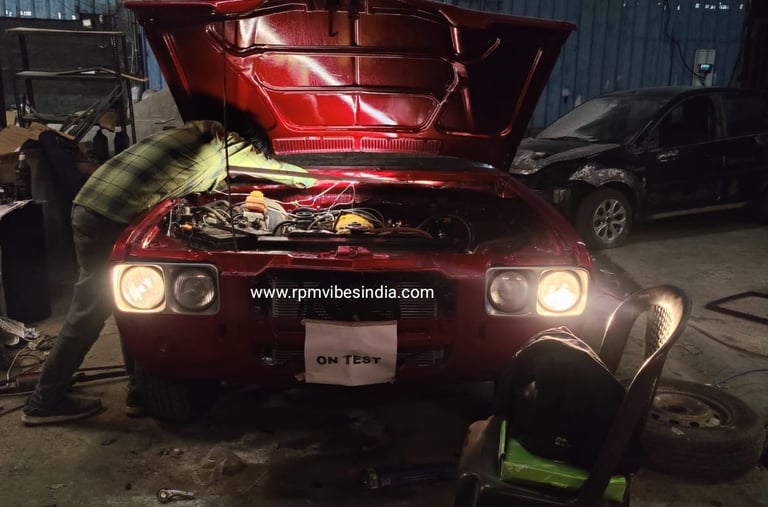
Is Engine Swapping Legal in India? Everything Car Enthusiasts Need to Know
India has one of the biggest automobile enthusiast communities in the world. From modified Gypsys to turbocharged Hondas and diesel-swapped SUVs, people love experimenting with machines. But one question always creates confusion among car lovers:
Is engine swapping legal in India?
The short answer is: Yes — but only under strict legal conditions.
Many enthusiasts think swapping an engine is just another modification, but legally it is considered a major alteration under Indian motor vehicle laws. If done incorrectly, it can lead to fines, registration cancellation, insurance claim rejection, or even vehicle seizure.
What Indian Law Says About Engine Swaps
Engine swaps in India are governed under the Motor Vehicles Act, 1988, especially Section 52, which deals with vehicle alterations.
According to the law, a vehicle owner cannot modify a vehicle in a way that changes its original specifications mentioned in the Registration Certificate (RC) without official approval. Since the engine number and engine specifications are recorded in the RC, changing the engine without updating documents becomes illegal.
When an Engine Swap Is Legal
There are limited situations where an engine replacement can be legally approved in India.
1. Same Engine Replacement
If your original engine is damaged, you can replace it with:
The same engine model
Same cubic capacity (CC)
Same fuel type
Same manufacturer specifications
This is usually treated as a repair rather than a performance modification. After replacement, the new engine number must be updated in the RC through the RTO process.
2. Approved Fuel Conversion
Certain approved conversions are legal, such as:
CNG kits
LPG kits
Some EV conversion kits
But these must be officially certified and approved by authorities like ARAI, and the RC must be updated accordingly.
What Is Usually Illegal
This is where most modified cars in India become legally questionable.
Performance Engine Swaps
Installing a larger or more powerful engine than the original specification is generally not legal.
Examples:
Putting a V8 in a small sedan
Swapping a diesel SUV engine into a hatchback
Turbocharged conversions changing factory specs
Such swaps alter the “basic character” of the vehicle, which goes against Indian modification rules and Supreme Court guidelines.
Cross-Brand Swaps
Installing engines from different manufacturers is mostly not approved.
Example:
Maruti engine inside a Hyundai
Toyota engine inside a Mahindra
These modifications usually fail legal approval because the vehicle no longer matches factory homologation records.
Petrol to Diesel Swaps
Fuel-type conversions through full engine swaps are now extremely difficult to legalize because of stricter emission norms.
Legal Procedure for Engine Replacement in India
If you genuinely need to replace an engine legally, this is the normal process:
Apply for permission at your local RTO
Submit alteration forms and engine details
Install the replacement engine
Keep invoices and engine documents safely
Get the vehicle inspected by the RTO
Update the new engine number in your RC
Without this process, your vehicle technically becomes illegal for public roads.
Why Illegal Engine Swaps Are Risky
Many people ignore the legal side because modified vehicles are still commonly seen on Indian roads. But the risks are serious.
Insurance Problems
If your engine details do not match your RC:
Insurance claims may get rejected
Accident investigations become problematic
Policies can become invalid
RTO & Police Checks
With digital systems like VAHAN now tracking vehicle details, engine mismatches are easier to detect during:
Fitness inspections
Traffic checks
Ownership transfers
Insurance renewals
An unapproved swap can even lead to registration cancellation.
What Enthusiasts Say Online
Indian automotive communities are divided on the topic.
On Reddit and Team-BHP, many enthusiasts mention that older engine swaps were more common in India, especially in Ambassadors, Gypsys, and Maruti projects. However, most agree that modern rules have become much stricter after the Supreme Court’s 2019 ruling on vehicle modifications.
Some enthusiasts still build project cars for private use or track-only purposes, but using heavily swapped vehicles legally on public roads remains difficult.
Final Thoughts
Engine swapping is one of the most exciting parts of car culture. It represents creativity, engineering passion, and the desire to build something unique.
But in India, legality matters just as much as performance.
A simple same-spec engine replacement can usually be legalized with proper RTO approval. But major performance swaps, cross-brand conversions, and extreme modifications often fall outside legal road-use limits.
For enthusiasts, the dream of building the perfect machine is still alive — but understanding the law is just as important as understanding horsepower.
Would you legally engine swap your dream car if Indian laws became more modification-friendly? Share your thoughts in the comments.
Related Stories
Good News Ltd © 2022
Good News empowers the generation of tomorrow for a brighter future and hope for every individual.
Reframe your inbox
Subscribe to our newsletter and never miss a story.
We care about your data in our privacy policy.