Scrap Policy Update 2026
CARS
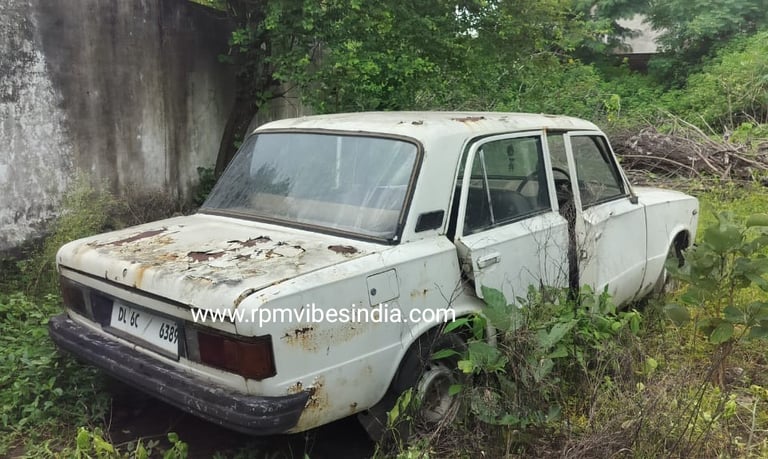
India’s Vehicle Scrappage Policy 2026: What Every Vehicle Owner Should Know
India’s Vehicle Scrappage Policy 2026: What Every Vehicle Owner Should Know India’s automotive landscape is changing rapidly, and one of the biggest topics in 2026 is the Vehicle Scrappage Policy. Whether you own an old diesel SUV, a classic sedan, a commercial truck, or a beloved family car, the new rules are beginning to affect millions of vehicle owners across the country.
But despite all the rumors online, many people still don’t fully understand what the scrappage policy actually means.
So here’s a simple breakdown of the latest 2026 updates, what is changing, and how it may impact Indian car owners in the coming years.
What Is the Vehicle Scrappage Policy? The Vehicle Scrappage Policy was introduced by the Indian government to gradually remove old, polluting, and unsafe vehicles from the roads. The goal is to:
Reduce pollution
Improve road safety
Encourage cleaner vehicles
Boost vehicle recycling infrastructure
Modernize India’s automobile ecosystem
The policy has now entered a much more active phase in 2026, with testing centers and scrappage facilities operating across multiple states.
The Most Important Rule in 2026 Private Vehicles Private cars older than 20 years must undergo mandatory fitness testing for registration renewal.
Commercial Vehicles Commercial vehicles older than 15 years require mandatory fitness certification.
This does not automatically mean every old vehicle will be scrapped.
A vehicle can continue legally if:
It passes the fitness test
Meets emission standards
Remains roadworthy
However, failing the test can classify the vehicle as an End-of-Life Vehicle (EoLV), after which it cannot legally operate on public roads.
Major 2026 Updates More Scrappage Centers Across India As of early 2026:
129 Registered Vehicle Scrapping Facilities (RVSFs) are operational across 21 states and UTs
Over 4.3 lakh vehicles have already been scrapped under the policy
This is a huge increase compared to the early rollout years.
Automated Fitness Testing Is Expanding India is rapidly introducing Automated Vehicle Fitness Testing Centres (AVFTCs), where vehicles are checked digitally for:
Emissions
Brake performance
Suspension
Lighting
Structural safety
The idea is to reduce manual corruption and make fitness testing more transparent.
Bigger Incentives for Scrapping Old Vehicles Vehicle owners who voluntarily scrap old vehicles may receive benefits like:
Road tax rebates up to 25%
Discounts on new vehicle purchases
Manufacturer exchange bonuses
Scrappage certificates with financial value
Some states are now adding extra incentives to encourage faster adoption.
Why Many Car Enthusiasts Are Concerned While the government views the policy as environmentally important, many automotive enthusiasts and middle-class owners have mixed feelings.
Classic car owners fear:
Losing vintage vehicles
Increased compliance costs
Difficulty maintaining older cars legally
Many people also argue that a well-maintained old vehicle should not automatically be treated like scrap simply because of age.
On Reddit and automotive forums, users continue debating whether the policy promotes cleaner transport or forces unnecessary replacement of usable vehicles.
What About Vintage and Classic Cars? This is one area where confusion remains high.
Properly registered vintage vehicles generally fall under separate regulations and are usually exempt from normal daily-use restrictions. However:
They cannot always be used like regular daily vehicles
Special registration categories may apply
Documentation becomes extremely important
For classic car lovers in India, preserving automotive history is becoming harder as regulations tighten.
Delhi NCR Rules Remain Strict Delhi NCR still has some of the strictest vehicle-age rules in India:
10-year diesel ban
15-year petrol ban
Even roadworthy vehicles can face restrictions there because of pollution control measures.
This continues to affect thousands of owners of older but functioning vehicles.
Is the Policy Good or Bad? The answer depends on perspective.
Advantages Cleaner air
Safer roads
Better recycling systems
Push toward modern fuel-efficient vehicles
Concerns Financial pressure on middle-class owners
Threat to automotive heritage
Increased dependency on newer vehicles
Limited testing infrastructure in some regions
India is still in the transition phase, and many rules continue evolving state by state.
Final Thoughts The Vehicle Scrappage Policy 2026 is no longer just an announcement — it is now actively changing how old vehicles are treated across India.
For some people, it means finally replacing aging vehicles with cleaner technology.
For others, especially classic car lovers, it feels like the gradual disappearance of an important automotive era.
One thing is certain:
India’s roads are changing fast.
And the future of old vehicles now depends not only on emotion and maintenance — but also on paperwork, fitness tests, and evolving regulations.
Do you think old vehicles should be judged by condition instead of age? Share your opinion in the comments.
Related Posts
Good News Ltd © 2022
Good News empowers the generation of tomorrow for a brighter future and hope for every individual.
Reframe your inbox
Subscribe to our newsletter and never miss a story.
We care about your data in our privacy policy.